
Guests

02/17/26 Vivian McPeak & Matt Elrod

Program
Cultural Baggage Radio Show
Date
Guest
Matt Elrod
Vivian McPeak

Featuring Vivian McPeak and Matt Elrod. Vivian was the ramrod of the Seattle Hempfest and is  full-time activist and event organizer who is passionate about social justice. Matt Elrod is a reclusive Canadian audiophile, poetic naturalist, veteran drug policy reform activist, library cataloguer, programmer and webmaster.

Audio file

09/30/25 Fascism Growing In the USA

Program
Cultural Baggage Radio Show
Date
Guest
Chris Bennett
Vivian McPeak
Organization
Drug Truth Network

Vivian McPeak Seattle activist and former head of the Hempfest + Canadian author, activist and surfer Chris Bennet join host Becker,  Topic exploding the Fascist "logic" of Trump and his band of merry criminals.

Audio file

REVEREND DEAN: (00:00)
I am the Reverend Dean Becker guardian of the drug war. Moral high ground prohibition has no benefit. It is a fascist tool. It seeks to gain control of all our rights, the future of mankind. This is cultural baggage. Hello, my friends. Thank you for being with us on today's edition of Cultural Baggage. I am Dean Becker, the Reverend Most High. We have two guests with us today, one on the West coast, one on the East coast. We're gonna start on the East Coast with the author and, uh, shaman, I think Mr. Chris Bennett. Hey, Chris. How you doing? 

CHRIS BENNETT: (00:39)
Um, it's a pleasure to talk to you again, Dean. How you doing? I'm 

REVEREND DEAN: (00:42)
Great. I'm, thank you. And then on the West Coast, we have the man who was for decades, the chief, uh, man in charge of the Seattle hemp vest. Good friend, Mr. Vivian McPeak. How you doing, Viv? 

VIVIAN McPEAK: (00:55)
Hey, man. Good, good. It's, uh, great to be here with two of my favorite, uh, rebel rousers. 

REVEREND DEAN: (01:01)
Well, I, that's the, the plan, isn't it? I, I wanna read this p this meme I picked up off the internet. Um, I think it, it says something really loud. Hitler didn't start with, uh, concentration camps. He didn't start with burning grandmas and babies. No. He started with making Germany great again. He started with banning books. He started with targeting the press of and the colleges. He started with ba blaming immigrants for everything. And he still is. He likes to create enemies with our, uh, neighbors north and south. He's defunding the arts. Well, this was Hitler, but it's also Trump. Smart people don't like me. Uh, he's also stoking fears of outsiders and demonizing educators and lawyers and colleges and so on down the line. And there are so, so many parallels, similarities between Hitler and Trump. Uh, I'm gonna turn it over to you guys if you want. Just raise your hand. Let me know. You wanna be next, uh, to speak, because, 

CHRIS BENNETT: (02:03)
Yeah, yeah. Well, you know, his, his, his interest in Hitler goes way back. It's well documented in the nineties. Vanity Fair had an article about Hitler, uh, Trump having a, a book of Hitler's speeches on his bedside table. And the guy barely reads, you know what I mean? And he made that comment to a general, when he was president, uh, in his first term about, uh, wishing he had generals that, uh, ha that the sort of loyalty that, that, that gave Hitler. And here, what did we see here just yesterday? Uh, a gathering of generals. And you can guarantee that every one of those generals had to take a loyalty oath to Trump just like anybody else in the MAGA government, you know what I mean? They're getting rid of any sort of liberal voices out of there, and they're making people take loyalty oaths and stuff like that. 

CHRIS BENNETT: (02:50)
There's just so many parallels to, to Hitler, you know what I mean? You know, the, the, the, the, the, the, the gas chambers were the final solution. And before that, they tried deporting people. And guess what? You know what I mean? A lot of countries to their shame didn't take in the Jewish, uh, refugees. And, uh, they ended up back in Germany, and then it became concentration camps. And then it was like those started filling up. And then, what are we gonna do with all these people? It's costing us money, you know, we gotta feed 'em and we gotta house 'em and have guards and all that type of stuff. And this is what led to the final solution. And you can see, uh, the Trump mentality there of, uh, uh, uh, of al alligator Alcatraz and deporting people to, uh, uh, uh, very, uh, brutal countries, uh, uh, and, you know, basically, uh, uh, selling 'em off as, as, as cattle almost to some of these places. And, uh, you know, where are they going with it? You know, where's it going? 

REVEREND DEAN: (03:48)
Can I put in 2 cents here? We've all seen, or many of us have seen that movie, the Schindler's List, talking about this man who tried to save the lives of all these Jews from grandma to baby, uh, just, uh, rounded them up as his, uh, slaves in essence, is what it was. They were working for him, and he was making hearts for the German army for, and even their kitchens or whatever. But he had these people making these, uh, products to stay alive. And that's how they stayed alive and stayed out of the concentration camps, right, Chris? 

CHRIS BENNETT: (04:22)
Yep. 

VIVIAN McPEAK: (04:23)
Absolutely. Yeah, 

REVEREND DEAN: (04:24)
Go ahead. 

VIVIAN McPEAK: (04:25)
This, this, this Defcon one constitutional, uh, and, and global security crisis. It, it might be unprecedented for the United States, but it's, it's, in no way is it unprecedented. You know, globally, we've seen this throughout history. And, and Trump has really seized on seven things that dictators do. Authoritarians do, attacks on democratic institutions, authoritarian rhetoric and cult of personality, nationalism, scape going suppressing of descent, erosions of norms and rule of law, militarization of power grabs, and then reviving ultra nationalist slogans like America First, which echoes past fascist movements. None of this is new. However, it, it is never really been done in a country quite like America. And that's, but they're moving quick, man. They're moving fast. 

REVEREND DEAN: (05:18)
Yes, they are. They are. They're trying to Blitz Creek this to get it done. I look at it this way. It's a crime spree, and they must get it done, uh, in a timely fashion in order for it to work, because otherwise, we have this forthcoming election next year where Republicans are going to be ground back into the ground. I think they're going to be, uh, very much in peril, uh, in that election. And they, they want to get it all done before then, because otherwise they will fall on their face. So, response to that, anybody? 

CHRIS BENNETT: (05:53)
One of the things I've been thinking about is like the, the comparison in their charisma and the hold of people. You know, we used to always say, how could people do that about Hitler? You know? And now we know, uh, um, and it's like, I don't know what it is. It's like I hear him speak and I just hate everything that he says, and I'm, you know, uh, um, horrified. But then somebody could be sitting right beside you and they're totally enthralled and feel like they're, uh, listening to a man sent here by the good Lord, . And, you know, I know we all have mutual friends. You know what I mean? We've, we've known all each other all for about 30 years now, probably. And, uh, um, we've known people that we, we've all known, and they've flipped over to it. And I don't understand it. You know, it's like, I, it's like, it's like a Stephen King book or something like that. 

VIVIAN McPEAK: (06:43)
Yeah. It's, it's like a, it's like a mass hypnosis right? Or a mass psychosis. And I, I don't understand how anybody intelligent enough to hold down a job, right? Could not look at this guy and see through his veneer of, of, of bologna. I mean it, to, to think that, that Donald Trump is a patriot, a Christian, you know, a, a good, a, a genius businessman. I mean, how dense, it's like these people, like the maga people are lemmings racing to be the first ones off the cliff. You know? It's just, it's mind blowing. And my hope is, you know, there's already cracks in the veneer. You know, uh, Candace Owen, Margie Taylor Greene, Tucker Carlson, uh, Nick Fuentes are already kind of peeling off over different issues, you know, you know, just today I read that Mar Marjorie Taylor Green just put out a thing saying, I'm not suicidal. 

VIVIAN McPEAK: (07:41)
If something happens to me, I didn't kill myself , because she's calling for the release of the Epstein files. Right? I mean, this is the, the kryptonite that we need. And I'm just hopeful that when, when the economy completely starts crumbling, 'cause it's, there's no way to avoid it. They're destroying this economy and maggot rural state MAGA voters. They're already starting to see, you know, how the farmers are being destroyed. Uh, you know, they canceled the U-S-C-I-D contracts after the farmers and made the initial investment screwing them. Now Trump's given $20 billion to Argentina, who China's now buying soybeans. There's all the soybeans from screwing the farmers. Um, and when they lose their SNAP benefits and their Medicare and stuff, I'm like, are, are they gonna go? Well, wait a minute. I'm not the lib. Why are they owning me? And, and, and that's, I think our only hope is that there's a mass defection. And when, when they realize that this is basically a Titanic, 

CHRIS BENNETT: (08:47)
I just see nothing but denial there, though, you know, when I interact with mega people online, and, you know, you take a look at like Trump's Retag speech at the un , you know, he's like saying every other country's going to hell and America's entering a new golden age, and all the things he says, a reverse, 

VIVIAN McPEAK: (09:04)
But, but it hasn't bit them on the yet. That's my whole point. Yeah. Right? They haven't personally felt it, and it's unavoidable. It's coming. But the question is, will it be too late by then? 

CHRIS BENNETT: (09:15)
Don't blame it on Biden's economy. 

VIVIAN McPEAK: (09:18)
, , right? 

REVEREND DEAN: (09:19)
Uh, it's, it is amazing, isn't it, that all of the numbers, the inflation and the, the groceries and everything is just falling apart. And every day he goes on TV saying it's higher than, you know, it's coming up and we're doing good. And, and, and his people want to believe him. I, they're going to the grocery store and they're buying gas. They know the prices, but they still want to believe this guy. It's, 

CHRIS BENNETT: (09:44)
And they, and he fires people that give him the numbers that he hired, you know? And I mean, it's like, oh, I don't like those numbers. You're fired, . You know, it's like, it's, 

VIVIAN McPEAK: (09:52)
It's, it's a reverse truth. Projection. Every accusation is a confession. Everything's reverse truth. Right? And did you see what he did yesterday? He signed this presidential memo that was basically a declaration of war against Americans. Yeah. And it's, and it's these organ, I quote, these organized campaigns are, quote, designed to silence, opposing speech limit political activity, change or direct policy outcomes prevent the function of a democratic society. That's what he's blaming on the left. That is exactly what he's doing. Yeah. Yeah. And the people he's going after Lee, you know, it, it's basically criminalizes anyone who quote espouses anti-Americanism, anti-capitalism, anti Christianity, , extremism on migration, 

CHRIS BENNETT: (10:38)
Racialism 

VIVIAN McPEAK: (10:38)
And genderism hostility towards those who hold traditional American values on family, religion and, and, and morality. I mean, that's like a blank check to go after anybody they want. 

REVEREND DEAN: (10:50)
Exactly. Exactly. Which brings me to this. I don't know that you can actually have a date to pinpoint, but somewhere 25 years ago, alternate facts came into play that somehow, there's another set of words that mean the same thing to our party. And we can, we can look at it differently than the actual words of law and understanding. It's, it's, you know, 

CHRIS BENNETT: (11:16)
I think, I think, uh, um, in the Gulf War, you know, and after nine 11 and stuff like that, there was a real need for alternative media. You know, and guys like Alec Jones seemed pretty cool when he first came around, and he was, you know, spouting off stuff about the Gulf War and, and, and stuff like that in his, his first few years, you know, uh, um, and then it became, you know, this big, you know, money making venture. And then, uh, there's a competition for alternative news. And so let's just make some up. And, uh, that's, you know, kind of where the whole fake news alternative fact, uh, uh, era bore wouldn't, I don't think it would've taken place with a, you know, network TV would've just been stuck in one reality tunnel of the governments. But, uh, now we're even, you know, we're lost in a sea that's equally information and misinformation, uh, with no rudder, you know? And it, it, it's getting more and more difficult to tell what is what, especially with all this deep fake stuff and, and, and things like that. You know, and I, I, I kind of thought I was always kind of outside of the conspiracy thing, but I, I can't, nowadays, I still kind of wonder about Trump's assassination, or even some of the questions around Kirk's assassination. And, uh, just because it is so crazy right now. And it, it's all, 

VIVIAN McPEAK: (12:31)
Yeah. It's, it's, it's, it's all too convenient. I mean, either, either there's something contrived going on, or, or Trump's the luckiest, luckiest, you know, uh, plutocrat on earth because everything's been a perfect storm. And, and some stuff just this, none of this would've happened, I believe, if Obama hadn't been president. If then the pandemic happened, and then Black Lives Matter, all of this stuff created a, a perfect environment for Trump to exploit the white grievance, right? Yeah. And, and the other thing is, I think a lot of people don't realize, especially with this Maha stuff, is that the drug war did so much, um, with a lot of Americans to undermine the government's credibility. And, and the, the, the, um, the pharmaceutical companies credibility. When people saw the injustice of the drug war and how they went after the war on cannabis, it was easy to turn around and then, you know, take those realities and weave them in. 'cause that's what these, these people like rush limb, they take actual truths and they weave them in the narrative of bullish and conspiracy and lies, right? And you go, well, this is true. And, and that's true. And that's how people fall for, well, then it's all true, right? 

REVEREND DEAN: (13:52)
I look at it this way. We, we have, uh, woven into this new war on reality. That's what I call Trump's current war, the war on reality, the bringing back 1984. Let's, let's just manipulate reality so that we can do whatever we want. And, and I, I think of the, the people he put in place, I, I've got a list of his cabinet members. There has never been a bunch of more, um, subservient and I think unintelligent and, and just more, uh, I I, I don't even know the words, just goon ish. These people don't know what they're doing. They were hired for their stupidity. Can we talk about that? 

CHRIS BENNETT: (14:33)
Well, their masks are off, or should we say their hoods are off? Because the, the white supremacy has never been more blatant and more obvious in government. You know what I mean? These are like, they've got actual, you know, neo-Nazis in there, , you know, it's like, uh, uh, um, pretty blatant, like Stephen Miller man, and Trump's like Hitler. Well, Stephen Miller's his gobel . You have a nasty or little propaganda minister, uh, than that little creep. And then HEGs, heg hegseth, you know what I mean? He is got all sorts of white nationalist Christian tattoos and stuff, you know? And, uh, yeah, it's madness, man. It's Christoph fascism, really. You know what I mean? We've got a bunch of, uh, uh, Christian Zionists now mixed in with Zionists and I, I, you know, I I, I we're talking about Hitler and I, I, I hope I don't come across as anti-Semitic saying this, uh, because it's definitely not, it's things that, you know, people like Bernie Sanders and, uh, Norman Finkelstein and, uh, John Stewart and Lan Pape have pointed out. 

CHRIS BENNETT: (15:37)
But there's a, a major infiltration of Israeli money in American politics, and it's polluted the, the opposition just as much as has polluted the Republican party. And I, I, I, I don't see the, the Democrats, you know, I think, I think a big reason that, uh, uh, Joe Biden law, you know, the lost support and Kamala Harris as a result, was the support for this genocide in Israel that is, uh, funded and, and, and supported by the United States of America. I mean, Canada, we, we, we, we recognize Palestine as a, as a state. You know, we want, we want an end to this thing. And it's America's vetoes in the un. And, uh, and it's just gotten worse under Trump. He's planning on putting, uh, the Mar-a-Lago of, uh, of the Gaza Strip. 

REVEREND DEAN: (16:25)
I'm breaking in here for just a second. To remind you, you are listening to cultural baggage on Pacifica Radio. We just heard from Mr. Chris Bennett up in Canada. And next we hear from Vivian Mpe on the West coast. 

VIVIAN McPEAK: (16:40)
I, I think, yeah, I think that absolutely Gaza is a part of that perfect storm, this perfect storm of, of conditions, of, of elements that created especially the second Trump, uh, thing possible. But I want to go back to Trump's, you know, at, is his cabinet, right? His administration, that what qualified these, these people is their lack of qualifications, right? It's deliberate incompetence, but also their fealty, their loyalty. And so you put people in, in charge, they have no idea what they're doing, but they'll do whatever the hell you tell them to do, right? But the but at the absolute top of Trump's chain, he's the most incompetent one of all, of course, except he has, he's, he's a, he's a populist savant. He's an a moron. He's a blathering idiot, but he has some kind of almost supernatural ability to, to lie and manipulate culture war, right? 

VIVIAN McPEAK: (17:38)
But the people that aren't incompetent are the one, are the policy people. This is all Stephen Miller doing all of this. Russell Vaught and, and, uh, and, and Vance JD Vance. They aren't incompetent. And they, and, and I think at the end of the day, they aren't actually loyal to Trump either. And I think that the whole idea is that Vance is set to be pr, and we saw this with Peter Thiel and, and, and Musk, they're, they're Curtis Jarvin acolytes, right? And Vance and Peter Thiel groomed Vance to become president, spent millions of dollars laying the foundation, training him, you know, grooming him and putting him in this position. Um, and that's what scares me the most, yeah. Is that Trump kind of is his own worst enemy, uh, eventually, but I think their whole plan is that he's not long for this position. Well, these 

CHRIS BENNETT: (18:35)
Tech lords being, you know, the guys behind the, the advancements of AI and robotics and drones is like science fiction. We've all seen these science fiction movies, and these are, these are the diabolical villains that per personified, you know what I mean? They're, they're, they, they even, they even look like the, the, the, the villains of these movies. And that, you know, people like, you know, Musk continually, uh, tweaking things like, uh, rock until it's spouting off answers, endorsing Hitler, or, uh, talking about a white genocide in South Africa is like, what kind of mentality are these things gonna hold, you know, if these are the guys in charge of it. 

REVEREND DEAN: (19:17)
Uh, I, I just wanna throw this in that, you know, recently Trump, uh, I, I think it was at that funeral, he said he hates his opponent. Oh, he hates him so bad. And, and, and then I wanna talk about, he has something like 30 or 40, I can't remember right now, reporters from Fox that now work for him in one fact, either on his cabinet or somehow working for him. And, and one of those current Fox reporters, Mr. Brian Kiid, uh, about the same time that, uh, um, um, Kimmel was getting in trouble on the, on TV for just having a joke about mostly Trump. And, and I guess my point I wanna get to, Brian Kiid was quoted that same week saying, for the homeless, let's just kill 'em, uh, kill 

CHRIS BENNETT: (20:04)
Al Injection . 

REVEREND DEAN: (20:05)
Yeah. In involuntary lethal injection. And he, 

VIVIAN McPEAK: (20:09)
But the Democrats, the Democrats have to, the Democrats have to tone down their rhetoric, man. Yeah. Yeah. 

CHRIS BENNETT: (20:15)
And then the next week, Jesse, swimmers like talking about, uh, bombing the un, uh, because of, uh, the escalator and, uh, teleprompter mishap, which was apparently due to White House staff, not the un. So, you know, it, it's like, yeah, yeah. The, you know, and everybody knows the majority of these vast majority of these shooters are right wing incel type lunatics, you know, 

REVEREND DEAN: (20:40)
Isn't Trump, go ahead. Go ahead. 

VIVIAN McPEAK: (20:43)
I was gonna say the Heritage Foundation just put out a thing that half of the school shooters have been trans, uh, um, people, which is a complete fabrication. Yeah. It's a complete lie. Um, but I just wanted to, to quick bounce off of, um, what, what Chris was saying. You know, it, it's like these people are Bond villains, but it's more like they're Austin Powers villains, right? Yeah. Um, they're so weird . Um, but imagine if Hitler had had AI and social media. Imagine how easy and and efficient it would've been to go after anybody. 

CHRIS BENNETT: (21:18)
Well, well, you know, they were working with a lot of stuff back in, even in Hitler's times. You know, they keep track of things like people's heartbeats during his speech and the inflection in the voice, and how that was affecting, and they mastered all that type of stuff, you know? And it's like Trump has that natural ability to, to, to tap into that, you know, he really can get his people growing, you know what I mean? Maybe we're horrified, but they're cheering, man. You know, it's like, I don't get it, man. I just don't get it. You know? I, I feel like it's like, it's a line in the sand for me. You know, once somebody goes, Megan, I, I have seen so few people come back from, uh, uh, uh, this cult, uh, uh, uh, uh, of Trump, you know? Uh, um, but once somebody goes, mega, that's it, man. It's just like, I just don't know. I can't do it anymore. It's over for me with them, it's like a line in the sand. It's like, it's beyond politics. It's like good and evil, man. 

REVEREND DEAN: (22:13)
Yeah. Well, and just the last day or two, Trump did sign his Antifa act, which it says that all of these people that he deems to be Antifa Yeah. To be terrorists a word. And 

CHRIS BENNETT: (22:26)
There's no organization, Antifa, it's just a blanket term that he could talk, toss on anybody who's against fascism and against, you know, uh, what he's doing and, and, and label anybody is Antifa, because there's no network. Well, 

VIVIAN McPEAK: (22:40)
That's, that's what his presidential memo was all about. It creates these vague anti-American views, anti, uh, American values. What does that, what does that mean? Yeah. That means anti-Trump. Yeah. That's what that means, right? That means anti-fascist, that means anti oligarch. You know, that's, 

REVEREND DEAN: (23:02)
That's just crazy. 

VIVIAN McPEAK: (23:03)
The, the, the, the, this, the level of authoritarian dictatorial, like total totalitarianism that we, they're racing at, it's, it's shocking. And I bel they know, they know what their polling is, right? And they also know what's coming. They, they're deliberately destroying the economy, I think, so that they, number one, they can break America's spirits, America's spirit, make it malleable, right? Um, if you're starving, if you're petrified, then it's, uh, you know, you're a lot easier to control. The other thing is, you know, every, every recession or depression has happened under, uh, nine out of 10 have happened under Republican administrations. Why is that? Because the oligarchs have the money to ride out the thing. It won't affect their lifestyle, but they consolidate their wealth on the buyer's market. When everybody's selling, they can buy everything up. And then we economy comes back up. They're four or five times richer, right? It's a scam. They've been pulling for a century. 

CHRIS BENNETT: (24:05)
And now that, you know, ice is like the largest armed force in the world, I think, I believe, larger than in history. History, largest armed force in history. And it's mega loyalists, you know what I mean? Proud Boys, anybody like that, man, you proud boy. Oh, you're in . You know, they're, they've let 'em in and they're everywhere now. You know, they have it set up. It's like his, it is like the Gestapo for Hitler, uh, is ice. And it's, I I, I, I really believe they're gonna say, well, we are gonna deport, uh, uh, um, people that are against the government. They lose their citizenship. And so then that opens up ice, uh, soldier that, or you can't be trans in our country. And so that opens up ice to seize those people. And we're gonna see that type of expansion with ice in no time. And that's where they're, I don't even, so they're ready for, I don't 

VIVIAN McPEAK: (24:54)
Think they're gonna deport, I don't think they're gonna deport Americans. They're building a hundred detention centers. Yeah. 

CHRIS BENNETT: (24:59)
Or that 

VIVIAN McPEAK: (25:00)
They're gonna have their free uncompensated prison labor. Yeah. Right. 

REVEREND DEAN: (25:04)
Yeah. Just like 

VIVIAN McPEAK: (25:05)
Something they're getting rid of all the, they're getting rid of the workforce, the immigrants who's gonna do that work? 

REVEREND DEAN: (25:13)
We're we're 

CHRIS BENNETT: (25:13)
Liberals in the cornfield . 

REVEREND DEAN: (25:16)
Well, yeah. We're, we're, we're nearing the end here. And I, I wanna bring up one more, I think very important subject that we should address. And that is, um, thus far that we're aware of. Trump has blown the crap out of three boats trying to come from, uh, Venezuela northward maybe headed to the US, maybe had drugs, who knows. No 

CHRIS BENNETT: (25:35)
Way They're had to us in those boats. Not enough to get there. No, it's extra judicial killings, you know? 

REVEREND DEAN: (25:40)
Exactly. And, and that is, look, they want that to be approved. They want that to be recognized as necessary. But President Duterte from the Philippines was just last week, I think sentenced to 20 years in prison for his doing of the same thing, murdering drug users or, or sellers, because he thought he had the right as king of the Philippines. And I think that's what Trump is doing now. Let's discuss that. Please. It's 

VIVIAN McPEAK: (26:08)
A, it's a process of desensitization, right? They're grooming Americans to, this is the norm. And they, it's just like with de you know, you start with the trans people 'cause it's 1%, you start, then you move on to the, the, you know, the, the, and this is what Hitler did. Then the, the gay people there, they're a little bit less weird. And then you go to the trade unionists, right? And event that's getting people used to this idea and then before they come after you, right? And so they're, these, these people are either fishermen or immigrants, right? And they're just like murdering them with no due process. No, but they're arjun. They're, they're off. They're off. You know, they're off the coast of Venezuela. They're not Americans. Right? So it's a little less shocking. Yeah. It's to get us used to the idea that they're just gonna be killing people. 

REVEREND DEAN: (26:55)
No, that's it. Uh, Chris, we, I'll give you 30 seconds. We gotta wrap it up here, buddy. What? What's, 

CHRIS BENNETT: (27:01)
Yeah, I wish, I wish I had some light at the end of the tunnel to give everybody, uh, um, but you know, right now, man, either you're fighting against fascism or you're standing, or you're or, or you're part of it, you're capitulating to it and letting it to get its tentacles into our culture and our world. So take a stand, man. 

REVEREND DEAN: (27:20)
Thank you. And, uh, Viv, your closing thoughts, sir? 

VIVIAN McPEAK: (27:23)
Well, these are the kind of times that make either patriots or, or, um, uh, traitors out of ordinary people. And, uh, I'm still hopeful it's not over. This is America. It's a unique, it's a unique society for this to happen. Um, but people need to get extremely active and be prepared for, for whatever comes. 

REVEREND DEAN: (27:43)
Thank you both. I do. It's gonna get worse. Yes, 

VIVIAN McPEAK: (27:45)
Sir. It's gonna get worse. 

REVEREND DEAN: (27:46)
Uh, yeah, it's gonna get worse. That's the whole plan, is to hurry this thing along so they can succeed. 'cause if they go slow, they're gonna fall. Uh, we gotta wrap it up here. Friends. Thank you for listening. Once again, I remind you that because of prohibition, you don't know what's in that bag. I urge you to please be careful and always remember that euphoria is a blessing, not a crime. And we are done. Gentlemen, I thank you so much. A hell of a show. Good, good stuff. There you go. 

VIVIAN McPEAK: (28:12)
Yeah. Well, I think we just, anybody 

CHRIS BENNETT: (28:13)
Arrested? ? 

VIVIAN McPEAK: (28:15)
We just, we just earned ourself a, a place in the Gulag. . Yeah, we 

REVEREND DEAN: (28:19)
Did. Yeah, we did. But, but, uh, I 

CHRIS BENNETT: (28:21)
Got a, I'll get a missile on my house here in Canada. , head of Antifa. When you hear about the head of Antifa going down, 

REVEREND DEAN: (28:29)
Yeah, we got it. That's 

VIVIAN McPEAK: (28:30)
Exactly Canadian, that Canada Canadian 

CHRIS BENNETT: (28:32)
Anti. Of course, it's a Canadian. What would you expect those 

REVEREND DEAN: (28:38)
Tap dancing on the edge of an abyss. 

Pres TRUMP: (28:42)
The job of the US armed forces is to spread democracy to everybody around the world at the point of a gun.

07/06/22 Vivian McPeak

Program
Cultural Baggage Radio Show
Date
Guest
Vivian McPeak
Organization
Seattle Hempfest

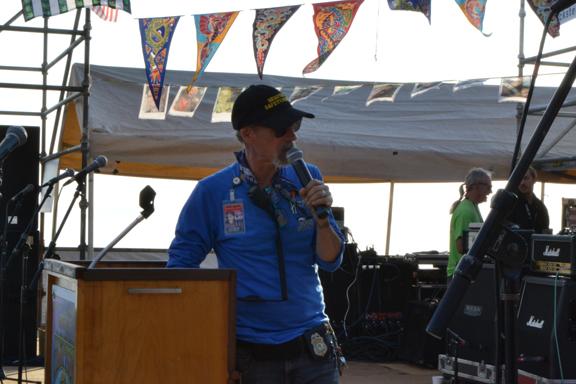
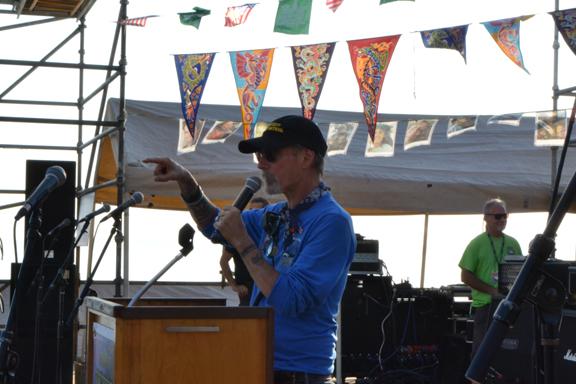
Vivian McPeak is an American peace, social justice activist, cannabis rights activist, and musician. In Seattle, Washington. Mcpeak founded the Peace Heathens in 1988, a Seattle community action group. McPeak and Gary Cooke organized the first Seattle Hempfest in 1991, the 2-day event has grown to become the world's largest cannabis policy reform rally. McPeak, who is director of Hempfest, performed with the rock band Stickerbush in the 1980s.
Audio file
07/03/19 Vivian McPeak

Program
Century of Lies
Date
Guest
Vivian McPeak
Organization
Seattle Hempfest

On this edition of Century of Lies we speak with Vivian McPeak,Executive Director of Seattle Hempfest, about partial success in an ongoing battle with Washington state over free speech issues; plus we
speak with Michael Krawitz from Veterans for Medical Cannabis Access about moves at the international level to reschedule cannabis.

Audio file

TRANSCRIPT

CENTURY OF LIES

JULY 3, 2019

DEAN BECKER: The failure of drug war is glaringly obvious to judges, cops, wardens, prosecutors, and millions more now calling for decriminalization, legalization, the end of prohibition. Let us investigate the Century Of Lies.

DOUG MCVAY: Hello, and welcome to Century of Lies. I'm your host Doug McVay, editor of DrugPolicyFacts.org.

Well, this week we're going to talk to Michael Krawitz. He's with Veterans for Medical Cannabis Access, and he's been very active on the issue of medical cannabis access, for veterans and non-veterans alike, on the international stage as well as within the US.

So we're going to talk to him about what's been happening over in Vienna, that Commission on Narcotic Drugs meeting in which they discussed the WHO's Expert Committee on Drug Dependence recommendations about rescheduling cannabis as well as descheduling CBD.

But first, loyal listeners will recall that we recently reported Hempfest was under attack. The state of Washington adopted rules, administrative regulations that essentially prevented companies involved in the marijuana business in Washington, these 502 licensees, from being sponsors or vendors at Hempfest.

Well, good news, the state of Washington has partly relented. I got a chance to talk with Vivian McPeak, the executive director of Hempfest, about all this. So, here's Vivian.

VIVIAN MCPEAK: Well, what happened was, this year the Liquor and Cannabis Board came at us with a different interpretation of legislation that's been on the books for several years, and previously prevented licensed cannabis businesses, 502 businesses, from having commercial speech at the event or at any event, really, or on public property and a thousand feet from this and that and that, which pretty much creates a grid through the city.

They could have their logo and their name and they could have informational displays, political displays. And then this year, the LCB came and said actually they can't have any displays, they can't have even noncommercial speech, they can't have political speech, or information, or advocacy.

And we came back, said well that's not Constitutional, and so we filed an injunction and a lawsuit. A reinterpretation, they -- a clarification's one way to look at it, and how about folding, going back on the previous situation, because that's what they did. And so, yesterday, the LCB issued a new bulletin saying actually, cannabis businesses can have noncommercial advertising and can do informational displays and things like that, or noncommercial speech, excuse me, not advertising for their business.

And that satisfies the injunction that we had. But the lawsuit's going to stand until the legislature changes the law, because we feel that it's still unconstitutional, even on commercial restrictions.

DOUG MCVAY: Okeh. So, the lawsuit is still continuing --

VIVIAN MCPEAK: So in other words -- in other words, they backtracked on what they've been telling us.

DOUG MCVAY: Okeh. Not a complete capitulation but they're -- the bottom line here. You know, Hempfest will be going on one way or another, but will we -- will you still be, will people be able to sponsor stages, will they be able to have banners up on the main stage -- ?

VIVIAN MCPEAK: Yes.

DOUG MCVAY: Well, there you go.

VIVIAN MCPEAK: Yeah. What happened, Doug, is about a month ago, LCB issued a bulletin to all the licensees basically telling them they couldn't be at Hempfest. And you can imagine how that worked with our current sponsors and advertisers that were L -- that were licensed events [sic].

And, they -- a lot of them freaked out or wanted to pull out of the event, which was, you know, kind of devastating to us. And now we have a month and a half to put the word out that no, you actually can be at the event without risking their license.

DOUG MCVAY: Wow. Quite a compressed time frame. That's a heavy lift.

VIVIAN MCPEAK: Oh yeah. It is. It's been a year like that, Doug. There seems to be -- no, I'm not even going to say that, there is obviously a concerted, organized effort on the part of certain corporate and governmental entities to not have Hempfest happen any more, at least that's my -- that's my, what my interpretation of it is.

You know, we just came from a city meeting, Special Event Permit Committee meeting, minutes ago, actually, where we had several big left curves thrown at us. It's been one after another, frankly, and we're also in court with the city on things they've been trying to do to restrict various aspects of Hempfest, which we think are also free speech violations.

So, you know, as Bob Marley said, fighting for survival, fighting on -- fighting on arrival, fighting for survival.

DOUG MCVAY: So, the lawsuit will continue, you are going to be -- I've been looking up, there's, I mean, the tobacco industry had a -- had a landmark case the Supreme Court decided, where they decided that advertising restrictions were onerous, and that's -- that's, I think it was Lorillard. I'm going to have to look it up again.

But there is a tobacco industry case that I'm thinking that those LCB lawyers are aware of too, and they're probably quaking in their boots. The last thing they want is for cannabis to start being treated like other legal social use drugs.

VIVIAN MCPEAK: Yeah, you know, Bailey Hirschburg is a NORML lobbyist up here in Olympia state -- excuse me, in Olympia in Washington state, the capitol, and he recently transcribed minutes from a public meeting, including the LCB direct and some other folks, and they had a huge discussion over, you know, what's going on here? Can we capitulate somehow?

And now we're on the front page of the news, we didn't think this was going to be a front page story. We've got these people making decisions on our behalf, and it was quite telling to us that they obviously seem to have the opinion that they're on some shaky ground.

And of course, that was our opinion all along. But in the meantime, Doug, you know, we still have a hundred thousand person event weeks away, and we have fought probably five or six battles in the last ten months that have, it's just, you know, you have limited resources. We have only two paid employees, other than that it's a complete volunteer event, volunteer staffed event.

And this legal stuff, not only does it churn up tens of thousands of dollars of revenue, or, you know, of money, it also takes a tremendous amount of time and focus just out of the, you know, daily planning and production level stuff that you've got to do.

So it's been beyond taxing, it's definitely been the most taxing year that we've ever had.

DOUG MCVAY: Well, of course people can find out about Hempfest and where, when, and all that, at Hempfest.org. You are on the 16th, 17th, and 18th of August, if I'm remembering right?

VIVIAN MCPEAK: That is correct, and you know, Hempfest is going to happen this year, no matter what. If we're down there with a bullhorn, so, you know, we're going to put a chimney to shame.

DOUG MCVAY: And -- oh, the one other thing, which I just -- which I just found. I was right, my memory was not, did not fail me. Lorillard Tobacco Company versus Reilly, it was a Massachusetts, does Federal Cigarette Labeling and Advertising Act preempt portions of the attorney general of Massachusetts cigarette advertising ban, and they went beyond that, talking about the Constitution, and it was about a ban on tobacco ads and sales of tobacco within a thousand feet of schools and playgrounds.

I don't like to make comparisons to either the tobacco or the alcohol industry because they're obviously different substances, but that's kind of the point. Marijuana's less dangerous than either of those, so you've got to think that we should not be facing tougher restrictions than those two other industries. That's --

VIVIAN MCPEAK: Yeah. And the argument, Doug, is that there will be children in the park, and they'll be seeing these advertisements for cannabis, right? And I was just at the Fremont Fair, which is on -- a street fair in the Fremont neighborhood of Seattle, and there was a -- there was a Corona stage with a giant, you know, ten foot bottle of beer banner on the side of the stage.

There were beer gardens throughout the event where people were drinking alcohol in full view of kids. I was just at the [unintelligible] car show, where there were restaurants that had people sitting on the sidewalk at tables drinking alcohol in full view of children and stuff.

So, you know, alcohol kills 88,000 people a year directly, who knows what the indirect impacts are, and so once again, I don't see this as a fight for legalization, I see this as a fight for equality with alcohol and tobacco users, and businesses.

And like you noted, alcohol and tobacco kills thousands, tens of thousands of people, hundreds of thousands of people globally every year.

DOUG MCVAY: Viv, any closing thoughts for the listeners? And give the website once again just in case people didn't hear it the first time.

VIVIAN MCPEAK: Yeah, this is our 28th year, and its at Hempfest.org. They can also find us on Facebook and Twitter and all the usual social media places.

And, you know, essentially I want to say that free speech is not free. You've got to work very hard for it, and you have to be willing to sacrifice and take risks and throw it down. And so, you know, we just want to thank the community for 27 Hempfests free of violence and accidents any serious arrests or anything like that. There's usually no arrests at Hempfest.

And so my final words are just thank you to the cannabis community for being so awesome. That makes us proud to represent you, and it makes it possible to represent you.

DOUG MCVAY: Vivian, thank you. God bless you, good luck with everything.

VIVIAN MCPEAK: Back at you, Doug. Take care, my brother.

DOUG MCVAY: Cheers.

VIVIAN MCPEAK: Love you, man.

DOUG MCVAY: I love you.

VIVIAN MCPEAK: Bye.

DOUG MCVAY: That was part of my interview with Vivian McPeak. He's executive director of the Seattle Hempfest. Again the state of Washington has relented in its ban on advertising and promotion by 502 licensees. They will be able to participate in Hempfest this year. The suit does go on, and we wish Seattle Hempfest all the best. They are fighting for everyone's free speech rights.

You're listening to Century of Lies. I'm your host Doug McVay.

Now, let's get to that interview with Mike Krawitz. He's again with Veterans for Medical Cannabis Access.

Michael, the Commission on Narcotic Drugs had a meeting on June 24th at which they reviewed recommendations from the World Health Organization's Expert Committee on Drug Dependence. Those recommendations on cannabis, cannabis resin, on various cannabinoids.

That ECDD, the WHO's body, is recommending some rather serious rescheduling moves. It -- could you tell us first of all what happened?

MICHAEL KRAWITZ: Well, I guess the first thing I should do is just a thirty second deep background, just so you know where this is all kind of coming from, because it seems a little confusing and if you listen to the Russian ambassador, you could be very misled as to where this is coming from.

Believe it or not, back in 2009, Japan asked for this. It wasn't just Japan, Japan and Azerbaijan put in a resolution before the Commission on Narcotic Drugs, the United Nations body, 53 member states that are delegated the authority to work on the drug policy year to year, and they do.

And these 53 countries voted unanimously, consensus, that indeed, as Japan had pointed out, they didn't really know much about cannabis and they -- specifically Japan wanted to see if you could add cannabis seeds to control, because they were very concerned that their young people were buying seeds on the internet, probably from Marc Emery. Remember? [sic: Marc Emery had gotten out of the seed business by 2009.]

But they were buying seeds on the internet and growing them in their closet and they wanted to see if they could put that under international control, get some help from the international cooperation agreements to, you know, stamp this behavior out.

Well, I don't think to this day that they really realized what a box that they were opening by doing so, because seeds are exempt under the treaty. That was actually a very big lift that they were trying to do by adding seeds, and in fact, after all this time, and the World Health Organization weighing in and doing this huge evidentiary review, there isn't much said about seeds in the end. It's really funny.

But, in the end, the World Health Organization found out a couple of things. They found out that cannabis had never been reviewed before. They had never done a science -- they thought there was a scientific evaluation that underlied [sic] the placement of cannabis in the treaty back in 1961, and they were wrong.

So this is the very first evidentiary collection that's ever been done, and you need to know that the World Health Organization is actually written right into the treaty, the United Nations treaty on drugs calls for the World Health Organization, the world authority on medical issues, to weigh in on these drug scheduling decisions. That's who's supposed to make these evidentiary reviews and these recommendations.

And after doing so, they came up with a host of recommendations that essentially recognizes cannabis as a valuable medicine, even if it's the plant material, recognizes it as a medicine, and also recognizes that it's been inappropriately placed, that it should be much less controlled, much less restricted.

And less restricted at the international level would have implications in the United States, because our Controlled Substances Act of 1971 is also dependent on that treaty. It was written with the Constitutional authority of the federal law, you know, actually working right from the treaty, drawn from the treaty.

So, and a lot of other countries, a whole lot of other -- there's 186 countries that have signed the treaty. A lot of them have very closely tied national law to the treaties, so if you change the treaty, it will cause a cascade effect of at least review of their national law.

DOUG MCVAY: So now, the ECDD has done this review. They're recommending that cannabis the plant, in essence, should be taken out of its Schedule Four, which lists drugs -- controlled substances, rather, that are to be banned, period, and yet they're also saying it should remain within that 1961 convention's Schedule One, which is tight restrictions, still regarded as a dangerous drug, but that would no longer be a requirement that it be -- that it be banned. So --

MICHAEL KRAWITZ: In part. There's actually several parts to this, and I'll give you quickly the other parts. One is that there was considerable confusion around CBD. If you ask DEA about CBD, they say, oh that's drawn from marijuana, of course it's part of marijuana. It's marijuana.

If you ask someone that's doing hemp work, or doing hemp food products, or working in the hemp industry what CBD is, they'll say no, CBD is drawn from hemp, it's a nutritional supplement. It can be a medicine, you have to get it approved by FDA. And it has been approved by FDA as a medicine.

So this is very confusing. What the World Health Organization has recommended is a sentence in a note in the margins of the treaty that just makes it clear that CBD is not a subject to control. Just because you can get it from marijuana doesn't make it marijuana, not it's not marijuana, not it's not a subject to control.

That really could help a lot to clear things up, if that note gets inserted, if we win that vote and get that note inserted. It will make it clear that even with a dash of THC, CBD, even from plant material, doesn't matter if it's naturally occurring or CBD synthetic, it's not to be controlled as a drug.

The other thing that it said was --

DOUG MCVAY: To be clear, that means -- that essentially means descheduling. I mean, literally removing CBD itself from this, in a sentence --

MICHAEL KRAWITZ: Yeah, yeah, that would be -- they're clarifying that it isn't in the schedule, but it's from their perspective. You could look at it as descheduling, sure.

DOUG MCVAY: Yeah, which would -- yeah. Rescheduling is just -- it means moving the thing to a different schedule. This --

MICHAEL KRAWITZ: They're not -- they're putting a margin note that makes it clear that CBD is not a subject of control. So in essence, they're making both the argument that it's not a subject of control, and that it never has been.

DOUG MCVAY: Interesting. I'm sorry for interrupting, that was just, it's just that's --

MICHAEL KRAWITZ: Oh no, so, and the other things that it's doing, it's taking THC out of the 1971 treaty, which is all about hallucinogenic and psychotropics, and putting it back kind of where it belongs with cannabis in the '61 treaty. If you ask me why that all needs to happen, it's all timing.

Back in 1961, they didn't know what THC was yet, and the '71 treaty, when they passed it, they had found out what THC was and it was convenient to put it in the '71 treaty, and I think back then they were talking about it a lot more in terms of a hallucinogen, and I think these days scientists and those in the know, even police, they don't really talk about cannabis in terms of hallucinogen anymore.

And it really would make more sense for THC, synthetic or natural, to be in the same place as the plant material that produces THC, it's very confusing, so they're talking about rectifying that, and also, they're talking about medicines where it's hard to pull the THC out. In other words, some sort of composite medicine. Not necessarily FDA approved, but an FDA approved medicine would certainly satisfy this criterion.

They're recommending an even lower schedule, Schedule Three in the treaty. So, they're talking about taking it out of -- cannabis, whole cannabis out of Schedule Four, but leaving it in Schedule One, which is not the same as USA Schedule One, it's a lot less restrictive, so you know.

And then they're talking about, you know, preparations that can't be so easily abused being in the lowest schedule available, allowing for over the counter sales without a prescription, is what that calls for in the treaty, Schedule Three.

So that's -- it's a really amazing recommendation, and again, you know, it's the World Health Organization's job to make these recommendations. They're the ones that make these kind of evidentiary reviews, and if the United Nations wants to call its cannabis policy evidence based, they really now have no choice but to accept these recommendations.

They are fair, they were done with an exhaustive amount of study, dozens of higher institutions of learning involved, and I think they've done a fair job.

The critics would say, oh, well you shouldn't have cannabis in Schedule One, we -- that should have been reschedule out of Schedule One, but, two things about that. One, those critics didn't bring that up during the process. I wish they had, but they didn't, and we never really got to discuss this during the process, and it's a shame, because we all resolved during the process that that was okeh, for it to leave it in Schedule One, because of the fact that it would actually require a rewrite of the treaties, not just a rescheduling recommendation at that point.

The treaty is written around cannabis .They said things that look like cannabis are put into Schedule One. So, it would be more than just rescheduling to pull cannabis out of Schedule One.

And also, coca is in Schedule One as well. Coca and cannabis together in that schedule, neither one of them belong there. I think that an action, you know, by the United Nations later on to remove these plant materials from Schedule One and figure out what's more appropriate, rewrite the sections of the treaty that need to be rewritten.

I think that's a lift for the United Nations to do. That's my, really my thinking personally, but also my thinking with my organizational hat on, working as a coalition, we really don't feel slighted by that.

The Transnational Institute has been kind of championing the cause of rejecting the World Health Organization's findings because of just that, because it's inconsistent. Yeah, it's inconsistent, even the World Health Organization pointed out that cannabis really doesn't belong in Schedule One, it's not like a lot of the other things that are in Schedule One.

But, yeah. Here's where we are. And I think that in the end, I think this is actually something we can get passed through the Commission, again because it's reasonable, it's middle of the road, and it's completely based on evidence. It doesn't go off on a, you know, it doesn't do what we want them to do, it doesn't do what we don't want them to do. I think it's a compromise.

DOUG MCVAY: Similarity, indeed, is one of the, is the reason that the recommendation to remove it from the '61's Schedule Four, because it was so dissimilar from the other substances that were in that list of complete bans.

MICHAEL KRAWITZ: Absolutely. Absolutely. In Schedule Four, it was an absurdity. There was absolute consensus that cannabis didn't belong in Schedule Four.

DOUG MCVAY: Now, clarify. You mentioned coca and cannabis as not belonging in Schedule One. Would you say -- would, I mean, what do you think? Would the plant matter, the cannabis plant, the coca plant, should be either removed from the schedules or at least moved further down, and then the extracts, so cocaine and, well, THC I guess is in Schedule One now, right? Or is that their suggestion?

MICHAEL KRAWITZ: You know, this is one of those areas where my associate, [unintelligible], who I work with over there at the UN, and we've been kind of co-authors on all of these documents, I wish he could answer that because I think he'd be more ready to answer.

But my take is that, where we're at right now is that these plant materials don't belong there, but then again we don't have real consensus on exactly what we should do.

I think the idea to remove all the plant materials from control completely, and then only control the drugs. In other words, you have THC controlled, why do you need the plant material controlled? If you are growing the plant material as a -- in the treaty, it strictly allows for horticultural use, and strictly allows for industrial use.

So if you're growing it to make, you know, bedding for your horses, or you grow it because you think it looks pretty in your window box, that's of no concern to the drug authorities. Really, at the local level all the way up to the UN. Only it becomes a concern is if you try to put these, the drug substance from the plant material.

So I think it makes sense to actually remove these plant substances themselves from control, and only control the substances that are derived from them. I think, my opinion would be to do that.

DOUG MCVAY: We're going back to the Yippies from the 1980s. You know, natural plant drugs, put stricter controls on the things that are further out, the processed, use the, you know, have the, things like coca products available to sort of sop up the market.

I mean, there's, if there's a legitimate market for coca products that don't, you know, that doesn't involve the processing into cocaine, then just give the farmers an income and the raw material's no longer available to the cartels. I mean, it's actually a pretty straightforward kind of way to deal with the whole thing.

MICHAEL KRAWITZ: You know, I've witnessed some great stuff over the years, and one of the things I witnessed was President Evo Morales speaking for Bolivia over at the UN about coca. And what he said applied to cannabis completely, if you just pull the word coca out and put cannabis in.

He was talking about how it had been used as a medicine, it was used by, you know, a group of people in their cultural habits and rituals going way, way back, and it was a food, it was a medicine, it was part of their rituals and practices, and there are all these great products derived from it, and that it's not a drug.

He emphasized that Bolivia was willing and ready to step up and fight, you know, against very dangerous drugs, but, including cocaine, but, you know, coca was not cocaine, and they needed to draw a line that allowed their people to commerce in this and to utilize this substance that had been part of their way of life for, you know, forever.

And I just thought it was wonderful. In fact, you know, we talked to -- we got to talk to the president after that, in an NGO room, and, you know, several people from the cannabis movement were asking him for help, and of course, that was the wrong thing to ask him. You know, he wasn't there to work on cannabis issues for us.

But, nonetheless, I think, you know, if we had said, hey, thank you for that, and we're going to use that as a model for what we're going to try to do with cannabis, and it's a real inspiration to us. I think he would have liked that better.

DOUG MCVAY: You know, I listened to that -- I listened to that discussion and when they were starting to talk about THC, there were, you know, the -- there was concern, you know, among a lot of the -- among the people out there at this, the delegates about THC and the stories they had heard.

And it strikes me that, well, the concerns about really high levels of THC, yeah, natural plant product. If the plant product is available, then you've got, you know -- yeah, I suppose you'd have to have some kind of a price mechanism to keep people from processing into oils and doing the high powered concentrates. But, that's a thought that's going to be developed later.

MICHAEL KRAWITZ: And, that also I think is an argument for doing this slowly, and leaving as a bridge cannabis where it is in Schedule One, taking it out of Schedule Four so it's no longer as you say prohibited, but it would be -- it would be available as a medicine and normalized as a medicine but still controlled.

And if someone was to make a lot of high potency oil, that's, you know, not going to be an insignificant thing. It's going to be something that, just like making coca paste out of coca, or anything else, it's something I think governments will be able to easily still enforce their drug laws, even with these changes.

It's just going to take a little bit of the sting out of it for the, I think mostly for the user, and for the patients, because right now it's such a big hammer that they're going after these plant materials with, that it prevents all access. I mean, I don't need to tell you how hard it is in some places to have -- to get access.

DOUG MCVAY: And I'm not saying that I think that they should treat oil and high THC product in that kind of way. I think though that I can see them moving in that kind of direction.

Michael, any closing thoughts, and give us the social media and other web address where we can keep up with the work that you're doing.

MICHAEL KRAWITZ: Sure. So, the closing thought is that this timeline runs til March 2020, and that's when we'll have this majority vote, and we need to put pressure on these 53 countries that are members of the Commission on Narcotic Drugs to do the right thing and accept these recommendations.

Every -- all hands on deck, everybody has a role, you can help in a multitude of ways. Just pay attention to it, talk to your governmental leaders would be a good start. But anything you want to do to help. Veterans for Medical Cannabis Access, you can find us on Facebook, Facebook.com/USA.VMCA, as in Veterans Medical Cannabis Access.

DOUG MCVAY: That was my interview with Michael Krawitz from Veterans for Medical Cannabis Access.

And that's it for this week. Thank you for joining us. I'm Doug McVay and you have been listening to Century of Lies. We're a production of the Drug Truth Network for the Pacifica Foundation Radio Network, on the web at DrugTruth.net.

The executive producer of the Drug Truth Network is Dean Becker. Drug Truth Network programs, including this show, Century of Lies, as well as the flagship show of the Drug Truth Network, Cultural Baggage, and of course our daily 420 Drug War News segments, are all available by podcast. The URLs to subscribe are on the network home page at DrugTruth.net.

The Drug Truth Network has a Facebook page, please give it a like. Drug Policy Facts, which is also Drug War Facts, is on Facebook too, give its page a like and share it with friends. Remember: Knowledge is power.

You can follow me on Twitter, I'm @DougMcVay and of course also @DrugPolicyFacts.

We'll be back in a week with thirty more minutes of news and information about drug policy reform and the failed war on drugs. For now, for the Drug Truth Network, this is Doug McVay saying so long. So long!

For the Drug Truth Network, this is Doug McVay asking you to examine our policy of drug prohibition: the century of lies. Drug Truth Network programs archived at the James A. Baker III Institute for Public Policy.

06/12/19 Vivian McPeak

Program
Century of Lies
Date
Guest
Vivian McPeak
Organization
Seattle Hempfest

This week we talk with Seattle Hempfest Executive Director Vivian McPeak about a lawsuit they've filed against the state over onerous restrictions on cannabis businesses, and we talk with Julie Bobitt,PhD, from the University of Illinois at Urbana-Champagne about her research on cannabis use by older adults.

Audio file

TRANSCRIPT

CENTURY OF LIES

JUNE 12, 2019

DEAN BECKER: The failure of drug war is glaringly obvious to judges, cops, wardens, prosecutors, and millions more now calling for decriminalization, legalization, the end of prohibition. Let us investigate the Century Of Lies.

Hello, and welcome to Century of Lies. I'm your host Doug McVay, editor of DrugWarFacts.org.

Well, I came across a couple of really interesting articles this week, looking at cannabis use by older adults, and by older adults, wow, they even mean people like me. But anyway, I digress, came across a couple of interesting articles about cannabis use by older adults, so I got in touch with one of the authors.

Doctor Julie Bobitt is Director of Interdisciplinary Health Sciences at the College of Applied Health Sciences at the University of Illinois at Urbana-Champaign. We're going to talk to Doctor Bobitt in just a moment. But first ....

VIVIAN MCPEAK: My name is Vivian McPeak, I'm the executive director of the world's largest annual cannabis policy reform event, the Seattle Hempfest.

DOUG MCVAY: August every year, the third weekend in August is Hempfest. This year it's 16, 17, and 18?

VIVIAN MCPEAK: That's correct.

DOUG MCVAY: Vivian, you just had -- Seattle Hempfest just filed a lawsuit. What is going on up there?

VIVIAN MCPEAK: Well, Doug, the Washington State Liquor and Cannabis Board, the regulatory agency that oversees 502 licensees, or cannabis businesses in Washington state, recently made a new interpretation of a Washington Administrative [Code] ordinance, and interpreted this advertising restriction to basically say that a cannabis business can't have any sign or logo or name or presence or message at a public event like Seattle Hempfest.

And we believe that that is unconstitutional, that it's broad and vague and overreaching, and we have filed a lawsuit against the LCB in state court today. We will soon be moving for an injunction, arguing it in Thurston County.

DOUG MCVAY: Okeh, now, this is -- this would be, so, vendors, people with cannabis, various companies, would not be able to - could they, I mean, could they have the name of the business, even? How restrictive?

VIVIAN MCPEAK: No. Not under this new interpretation of the law. Recently there was a new WAC, Washington Administrative Code, it was an amended code by the state legislature, and, you know, Hempfest met with the LCB last year and said, look, you know, this is really vague. It says that these businesses can't do advertising, but they can do other forms of speech. What defines advertising?

And of course, you know, they argued amongst themselves for two hours in the room with us and said they'd get back to us, and it was months later that they finally got back to us with this kind of ambiguous language.

But, still on their website until last month, it said that cannabis businesses can have informational displays at events like Hempfest. It named us. And then last month, they took that language off of their website and instead replaced it with this incredibly restrictive stuff saying that they can't even have a presence.

In other words, they can't have their name, their logo, their address, any sign of any kind. And, as you know, public parks and public spaces are the modern equivalent of a town square, and that's why they deserve the highest degree of protection, and as a free speech event, nothing's more important to us than political speech.

And what this interpretation does is it prevents these 502 licensees from for example having a sign that says "We Support Seattle Hempfest," or "This is the difference between CBD and THC," or "We Support The Ending Of Cannabis As Schedule One And The Legalization Of Cannabis Federally."

They're restricted from saying anything like that. And we think that that's just clearly a violation of free speech under the Constitution of the United States.

DOUG MCVAY: Okeh, now, these -- the sign restriction is because Hempfest is in a park, is that the case, or what? I mean, they can have -- ?

VIVIAN MCPEAK: These restrictions prevent any sign or other advertisement for a cannabis business within one thousand feet of school playground, library, or public park. And if you know anything about a municipality, that's pretty much everywhere.

DOUG MCVAY: Well, especially depending on how they define a public park, I mean, in some cases, I've seen, you know, arguments about like a bike path, and you have things like that cutting through the middle of town.

VIVIAN MCPEAK: Yeah. Exactly. And, you know, let's just mention too that this is a blow right to the heart of Hempfest's revenue generation, you know, it's one of our primary sources of revenue. I mean, who's going to advertise at Hempfest? Well, cannabis businesses, you know. Who's going to sponsor Hempfest? A cannabis business. Who's going to have a vending booth? Some kind of cannabis business.

So, there's very broad implications here, and we just feel this is a pretty clear cut case. And we've got to fight the power, man.

DOUG MCVAY: Well, obviously so, obviously so, I mean, this is -- I'm just looking at this, what is it, RCW 69.50.369, you reference it in the story on the website there, about advertisements, rules, penalties, and, let's see, any sign, other than identifying the retail outlet ...

VIVIAN MCPEAK: You know, Doug, we spent 27 years here fighting prohibition, and these ad restrictions, to us, feel like Prohibition 2.0, and it's just one of a variety of aspects of Washington state law that we feel is contrary to common sense and to sane, reasonable cannabis laws.

You know, I mean, if you're a cannabis business you can't even display a pot leaf, you can't have a pot leaf on your window, or on your sign, or anything like that, and, like, I don't know what kind of threat to society, to the children, the image of a pot leaf poses.

But this is just one in a long series of, kind of, what we think of as reefer madness -- an extension of reefer madness into this supposed legal paradigm.

DOUG MCVAY: Yeah, no depiction of marijuana plants, marijuana products, et cetera. I -- totally aside, but earlier today I was -- my twitter feed had a mention, Riverside County Sheriff's Office down in California was doing a marijuana eradication raid. Legalization 2.0 -- yeah, sorry Prohibition 2.0.

VIVIAN MCPEAK: Nice. Yeah, yeah. And I just want to point out that this is -- this is not about advertising, Doug, it's about restrictions on any signs and the fact that the legislation and the Liquor and Cannabis Board entirely bars certain speakers from identifying who they are, saying anything at all and distributing any literature at all.

The law and the board's interpretation is just really entirely over-broad, and restricts all meaningful speech, you know, not just advertising, but even political speech, informational dissemination, what have you.

DOUG MCVAY: You could see the argument made for things like, I mean I disagree with the idea of, you know, whether there are samples or not. Okeh, you can make -- okeh, that's debatable whether that's appropriate or not, I mean, I think you should, but --

VIVIAN MCPEAK: Sure, at least there's an argument, you know, whether we agree with it or not, there's an argument that could be made. But this is really silly, and since the days of James Madison, and the broadsides in public square, public space has been a central bastion of freedom of speech, especially political speech, and we think that the good people at the Washington State Liquor and Cannabis Board got it wrong on this one, and we're going to mount a vigorous defense against it.

DOUG MCVAY: Okeh, and again, that's in state court there, so where -- when and where is this, are you going to be -- are you in court tomorrow, did you say?

VIVIAN MCPEAK: No, no, I'm, you know, I'm not the attorney, I'm the activist guy. But I know that we'll be moving for an injunction against the LCB, because what they did is, they sent a letter to all the cannabis businesses that, like, the cultivators, the processors, the packagers, the retailers, and, you know, warning them against participating in Seattle Hempfest.

You can imagine what happened then. Our phones started ringing off the hook, and we're just a couple of months before the event right now. I mean, we would much rather be putting all of our energy into pulling this event together and producing another safe educational -- our twenty-eighth annual safe and educational Hempfest.

Instead, we're having to deal with this stuff. And it's not the only thing we're dealing with. We're also appealing an adverse decision of the city hearing examiner here in Seattle over one thousand dollar operating a marijuana business without a licence ticket that we got, over some of the same issues that are in the lawsuit, for a private party at a private house that we had as part of our membership program.

The city came in undercover and then issued us this citation, saying that because we were letting people smoke their own cannabis in the back yard of this house, we were operating a marijuana business without a license.

So we just feel like we're under attack on multiple fronts right now.

DOUG MCVAY: Vivian, I wish you the best of luck, I mean, this is just an outrage, what's being -- what's happening is just an outrage, it's ridiculous, there's -- it's obviously a concerted attack on Hempfest.

VIVIAN MCPEAK: Yeah, and at the same time, the city also, the FAS, Financial Administrative Services, is telling us that the signs that we had at the entrances at Hempfest, asking for a suggested ten dollar donation, constitute an admission fee.

And we said, well that's intriguing, because very few people give us anything. Everybody knows it's a free event.

So, we're just feeling like, you know, they're out to get us, and we're out to beat them. You know, it's always a struggle, but this is a little bit unusual.

DOUG MCVAY: Oh indeed. So, tell folks how they can -- tell folks your social media, but most importantly, where can people find out -- keep up with what's going on, where can people donate to Hempfest?

VIVIAN MCPEAK: Absolutely. I appreciate that. We've got a great show lining up, you know, with some great speakers and some great acts. It's going to be the usual, you know, more freedom than you find in Amsterdam down at Myrtle Edwards and Centennial Park.

People can go to Hempfest.org at any time, they can check out our Facebook or our Twitter accounts as well, look for @SeattleHempfest. At Hempfest.org there is a donation page, and people can make a contribution electronically right there, and we are probably actually going to be doing a GoFundMe, try and help raise some of the money for our attorneys and our legal fund.

People can always just come to Seattle Hempfest and drop something in the donation bins as they come in and out, because, and I'll say it, we request a ten dollar suggested donation for three days of three stages of music, premier arts, crafts, and informational vendors, and all the great, amazing speakers and vendors that we have, about three hundred vendors.

DOUG MCVAY: It's always a great show, and full disclosure: I'm volunteering on the speakers committee this year, so ...

VIVIAN MCPEAK: Nice. Nice. That's how you do it.

DOUG MCVAY: Yeah. You've got -- what is it, like a thousand people who volunteer every year? It's amazing.

VIVIAN MCPEAK: Yep. Yep, we'll fill about a thousand staff shirts, and we'll have a hundred thousand people attending the event. And you know, cannabis is still federally illegal. I mean, you walk into Idaho, right across the Washington border here, and find out that a doob tube is against the law there. They don't even recognize CBD as legal in Idaho.

And, you know, our esteemed attorney general, national Attorney General William Barr, he could, you know, sign a piece of paper and in two months every pot shop in America would be shut down. So we haven't won. We have a long ways to go, a lot of heavy lifting to do.

So it's more important than ever to have a Seattle Hempfest, and to thank people like, you know, Jimmy Romans, who's got a lifetime sentence for cannabis and has -- still has thirty years to serve, of his commuted sentence. So it's important as ever.

DOUG MCVAY: Right on. Truer words. All right, Vivian McPeak, director of Seattle Hempfest. Vivian, you're doing god's work, thank you, brother, for all you do, man. Thank you.

VIVIAN MCPEAK: Love you so much, Doug, I look forward to seeing you, bro.

DOUG MCVAY: Love you, Viv.

VIVIAN MCPEAK: Peace.

DOUG MCVAY: Cheers.

That was my interview with Vivian McPeak, executive director of Seattle Hempfest. Seattle Hempfest is of course August 16, 17, and 18 this year. I look forward to seeing everyone there. It will be an incredible event, as ever. Hopefully we can overcome some of these restrictions that the state decided to impose.

You're listening to Century of Lies. I'm your host Doug McVay, editor of DrugWarFacts.org.

NGAIO BEALUM: Make more noise here! Who here likes marijuana?! Let’s hear it for weed! How about pot? Who likes pot?! Who likes grass?! What about trees? How about fire? How about cannabis?!

I’m just going to do that for a few minutes, just going to go through synonyms for weed. You can make up words for weed as long as you use the verb twist or roll, everybody knows what you’re talking about. Hey, man, twist up a stiff-diffler. All right, dawg, one fat stiffie coming up. Where do you keep your stiff dankaciousness at?

I love marijuana. I go hard for weed, I’m from California, we're going to legalize in 2016, right after Oregon does it this year. If you live somewhere, go hard for weed. Go hard, I go door to door in my neighborhood like a Weed-hovas Witness. I have some good news about weed. Can I share it with you?

Good morning. I would like to talk to you about my personal relationship with marijuana. Do you have a few moments? Hi, have you accepted weed in your life? I have some papers here somewhere.

DOUG MCVAY: Julie Bobitt, PhD, is the Director of Interdisciplinary Health Sciences at the College of Applied Health Sciences at the University of Illinois at Urbana-Champaign. She's co-author on a couple of articles that have come out recently that are of great interest.

One of them, "Patterns of Marijuana Use and Health Impact: A Survey Among Older Coloradans" was published recently in the journal Gerontology and Geriatric Medicine. The other, published in the journal Drugs and Aging, is entitled "Qualitative Analysis of Cannabis Use Among Older Adults in Colorado."

I talked to Doctor Bobitt on the phone. Here's that interview.

JULIE BOBITT, PHD: My name is Julie Bobitt, I'm the Director of the Interdisciplinary Health Sciences Program in the Department of Kinesiology and Community Health at the University of Illinois Urbana-Champaign. And my research, really, I evaluate programs and policies that impact the health of older adults.

DOUG MCVAY: What led you to do research on cannabis use by older adults?

JULIE BOBITT, PHD: Well, in 2015-2016, I was a Health and Aging Policy Fellow and I was placed at the Office of the Surgeon General at the time when they were rolling out the Turn The Tide Campaign. That was a campaign to address the opioid epidemic in the United States.

And during that time, there were two committee hearings on the Hill that addressed opioids, and cannabis was brought up in the as a potential alternative. So that was just kind of the first spark. And then during that same time period, states that had legalized cannabis were seeing an increase in use by the older adult population.

So, my colleagues and I started discussing this, and we were wondering was this because, you know, were Baby Boomers who were already using just aging into this group? Was this the result of legalization of marijuana, more policies that were taking place across the states?

Or could this be tied to older adults experiencing more chronic conditions as they age? And could they be looking for alternative means of treating those conditions?

So we thought it was important to explore older adults' attitudes about, and experiences with, cannabis. And for those who were using, how they were accessing cannabis and the outcomes they were experiencing.

DOUG MCVAY: So, Baby Boomers. It's -- older adults. I'm a Baby Boomer. And I guess I am an older -- well, I'm older. We'll just leave it at that. So, tell me what have you found? Tell me your findings.

JULIE BOBITT, PHD: Sure. So, we have two articles that are out. One of them, "THe Patterns of Marijuana Use and Health Impact," that was our survey that we looked at of older Coloradans. And of the older adults in our study who were using marijuana, the majority were reporting using for medical purposes, such as for treating pain related conditions as well as for anxiety and depression.

And they were also using a variety of methods other than smoking, such as edibles and creams and tinctures. We also found that those who had used marijuana in the past year had reported that their overall health and quality of life improved, and they were reporting improvement in things like their day to day functioning and with controlling their pain.

And finally, one other thing in this article that we found, that older adults were reporting using for a variety of medical reasons, but they weren't always accessing cannabis from medical dispensaries. They were using both medical and recreational dispensaries.

DOUG MCVAY: Right on. And now, you've done a couple of articles, doing the -- you've got the patterns of medical and social cannabis use, and you've also got the new one out in the journal Drugs and Aging, it's, what is it, "Qualitative Analysis of Cannabis Use Among Older Adults in Colorado." Tell me about those findings.

JULIE BOBITT, PHD: So, while the first article was about survey data that we collected, the second article was based on data we collected through focus groups across Colorado.

So, my colleagues were out across the state of Colorado talking to groups of older adults, and we found that participants were interested in education about how cannabis can be used for medical purposes. And they brought physicians and community resources such as universities, libraries, and senior centers that would be good places to offer such education.

We also investigated the issue of how they were accessing cannabis, through recreational versus medical dispensaries.

We found that older adults sometimes experience difficulties accessing medical cannabis, and for our participants who were using cannabis, because we talked to people who were both users and non-users, the ones who were using cannabis were doing so largely to treat pain related conditions, which was also reported in our previous paper.

But with our focus groups we're able dig a little deeper on this, and we found that many of the individuals using cannabis were using cannabis in place of or to reduce their reliance on stronger pain relievers, such as opioids. And even our non-users were favorable to using cannabis if they were to acquire a condition in the future, especially if it meant that they might not have to use some of the stronger medications that are out there.

DOUG MCVAY: Interesting, and of course that's -- that goes right along with some of the, with a lot of other research that's been coming out about substitution of cannabis for the opioids. I want to go back though for a moment. You mentioned that some older adults were having difficulty accessing medical cannabis. Now, that's -- I mean, Colorado has medical cannabis, it has a legal adult use market. Why were they having problems with access?

JULIE BOBITT, PHD: Yeah, well, that was interesting for us. So, for the older adults that we spoke with, some were having trouble finding a physician that could certify them for the red card that's required for medical dispensary access.

Also, many reported that they were reluctant to bring it up their physician, that they had brought it up but their physician didn't feel knowledgeable about cannabis use and, you know, talking to them about it, and so, and some didn't really even support its use due to a lack of research.

So of course, you know, as you mentioned, in Colorado they have the option to go through the recreational dispensary. So when we first saw the data from our surveys, we just thought, well, you know, maybe older adults just prefer to go that route, maybe because it's easier, it's available to them.

But, through our conversations in the focus groups, we really were able to determine that many of the older adults we spoke with wanted to access it through a medical dispensary, and they wanted that direction from their healthcare provider, but just weren't always able to do so, for some of the reasons I stated.

DOUG MCVAY: - Now, in your article you also mentioned that older adults are also experiencing stigma related to cannabis use. Could you talk about that a bit, the kind forms it takes, and how it's impacting their lives and their healthcare?

JULIE BOBITT, PHD: Yes. Many of the discussions that took place in our focus groups including stories where the participant was afraid to admit their cannabis use to their own family members, their physicians, their friends. Even if you were using strictly for medical purposes, the reasons varied, but some that come to mind include being worried about what their physicians might say, or about others' negative opinions about cannabis use.

So, a lot of them kept it pretty quiet. They were afraid to be labeled a quote "pot head," is what some of them said, or felt that movies such as, you know, back when Reefer Madness came out, had caused an overall fear of cannabis use that's still with us today, even though it's legal in their state.

It was interesting, because many of the participants stressed that as an older adult they weren't interested in using cannabis to quote "party," but really had medical issues that they felt would be addressed by using cannabis. But even though they held these attitudes personally, they were still fearful of what others thought about it.

And I think, you know, as to how this could have an impact on them, this really could have a big impact on their healthcare because not disclosing their cannabis use could have medical implications if they're using other medications. So in general, having open communication with their own healthcare providers is certainly better for their health outcomes.

There wasn't a lot of discussion about how they coped with the stigma, but, the topic circles back to the need to really educate the public and the healthcare community about cannabis use for medical purposes.

DOUG MCVAY: This may be a bit off, and it's just a -- it's a thing I think about sometimes, but I know that some people have trouble identifying as a patient. I mean, no one wants to think that they're a patient, the older adults you were speaking to, I presume, were active consumers of healthcare.

Did any of them have trouble wrapping their heads around the idea of being a patient?

JULIE BOBITT, PHD: That didn't come up in our focus groups. It was really more about just feeling that there was an overall lack of education and information, not just for them as consumers, but also for health providers.

Even if they were able, or even if they felt like they could bring it up, there just wasn't a lot that they were provided back, as far as education.

And it could be around things such as dosage, the types of cannabis methods that they could use such as, you know, the ones that I mentioned above, you know, edibles or creams or tinctures. There isn't a lot of information available to them.

DOUG MCVAY: - Right on, right on. Again, folks, we're speaking with Julie Bobitt, PhD, Director of the Interdisciplinary Health Sciences [Program] at the College of Applied Health Sciences, University of Illinois at Champaign Urbana.

Julie, do you have any closing thoughts for my listeners, and also is there a website or social media where people can keep up with the work that you're doing?

JULIE BOBITT, PHD: Sure. Closing thoughts, I would say, you know, as with any research, our results need to be taken with caution because this is one study on older adults in one state, but it really provides us some insight into how older adults perceive cannabis, and shows the need for more education of users and the healthcare community as well.

Older adults are using cannabis, and whether this is something that people agree with, it shows the need for more open communication about this topic so that they're doing so in a way which can minimize any potential negative effects.

And I think it also provides us a first glimpse as to what is happening in relation to opioids. This is really an area where more research needs to be conducted.

And certainly people can keep up with the work we are doing. At the University of Illinois, I have an Aging and Health Policy Lab website where I include updates about our research, and that website is AHP.AHS.Illinois.edu.

And also my colleagues at the University of Iowa have a Cannabis and Older Persons Study website, which is COPStudy.Lab.UIowa.edu.

DOUG MCVAY: Brilliant. I'm from Iowa, by the way. Don't hold it against me. Anyway, Doctor Bobitt, I thank you so much for your time, and for your work. It's fascinating. I'll continue to check it out.

JULIE BOBITT, PHD: Well, thank you for inviting me to talk about our work.

DOUG MCVAY: That was my interview with Doctor Julie Bobitt. She's Director of Interdisciplinary Health Sciences [Program] at the College of Applied Health Sciences, University of Illinois at Urbana-Champaign.

She's co-author of articles entitled "Patterns of Marijuana Use and Health Impact: A Survey Among Older Coloradans," published recently in the journal Gerontology and Geriatric Medicine, and "Qualitative Analysis of Cannabis Use Among Older Adults in Colorado," published recently in the journal Drugs and Aging.

NGAIO BEALUM: So, marijuana's legal in Nevada now, right? And I heard a story about this guy who won a lot of money, won like a hundred thousand dollars, and this stoner came up to him and said, hey man, I know you won a hundred thousand dollars. I normally wouldn't ask this, but my girlfriend's very sick, I need ten thousand dollars so she can have an operation.

And the gambler says, well how do I know if I give you this ten thousand dollars, you're not just going to buy some marijuana? And the stoner goes, man, I have weed money.

DOUG MCVAY: And that's it for this week. I want to thank you for joining us. You have been listening to Century of Lies. We're a production of the Drug Truth Network for the Pacifica Foundation Radio Network, on the web at DrugTruth.net. I’m your host Doug McVay, editor of DrugWarFacts.org.

The executive producer of the Drug Truth Network is Dean Becker. Drug Truth Network programs, including this show, Century of Lies, as well as the flagship show of the Drug Truth Network, Cultural Baggage, and of course our daily 420 Drug War News segments, are all available by podcast. The URLs to subscribe are on the network home page at DrugTruth.net.

The Drug Truth Network has a Facebook page, please give it a like. Drug War Facts is on Facebook too, give its page a like and share it with friends. Remember: Knowledge is power.

You can follow me on Twitter, I'm @DougMcVay and of course also @DrugPolicyFacts.

We'll be back in a week with thirty more minutes of news and information about drug policy reform and the failed war on drugs. For now, for the Drug Truth Network, this is Doug McVay saying so long. So long!

For the Drug Truth Network, this is Doug McVay asking you to examine our policy of drug prohibition: the century of lies. Drug Truth Network programs archived at the James A. Baker III Institute for Public Policy.